
What is Acrylic Floor Coating? Comprehensive Guide
Acrylic floor coating is a flexible, durable, and weather-resistant floor covering solution used in a wide range from sports facilities to outdoor areas, parks to playgrounds today. These acrylic resin-based floor coatings stand out with superior features that respond to the challenging conditions of outdoor use.
Definition and Structure of Acrylic Floor Coating
Acrylic floor coating is a floor coating system consisting of a mixture of acrylic polymer resin, rubber granules, quartz sand, and various additives, with a water-based, environmentally friendly, and elastic structure. This material, which shows high resistance to UV rays, temperature changes, and rain, is preferred especially in outdoor sports facilities.
Chemical Structure and Components
Acrylic Polymer Resin
Acrylic polymer, the main binding agent, provides the product's flexibility, durability, and resistance to weather conditions. Its water-based formulation is environmentally friendly and low in emissions.
EPDM or SBR Rubber Granules
Rubber granules that provide flexibility, impact absorption, and comfort to the surface are generally 0.5-4 mm in size. Colored granules offer aesthetic variety.
Quartz Sand
A mineral filling material that gives the floor hardness, wear resistance, and grip properties.
Pigments and Additives
Thanks to UV-resistant pigments, colors do not fade for years. UV stabilizers, fungicide, and bactericide substances enhance product performance.
Layered Application System
Subfloor Preparation
Concrete or asphalt floor should be smooth, clean, and dry. Cracks should be repaired, surface slope should be adjusted for drainage.
Primer Layer
Acrylic primer provides bonding between the subfloor and upper layers. It strengthens adhesion by penetration.
Elastic Base Layer (Cushion Layer)
Layer consisting of rubber granule and acrylic binder mixture, providing impact absorption, 8-12 mm thick. Protects athletes' joint health.
Top Layer (Top Coat)
Colored acrylic layer containing fine quartz sand or EPDM granules determines the final appearance of the surface. Line markings are made in this layer.
Acrylic Floor Coating Types
Hard Acrylic
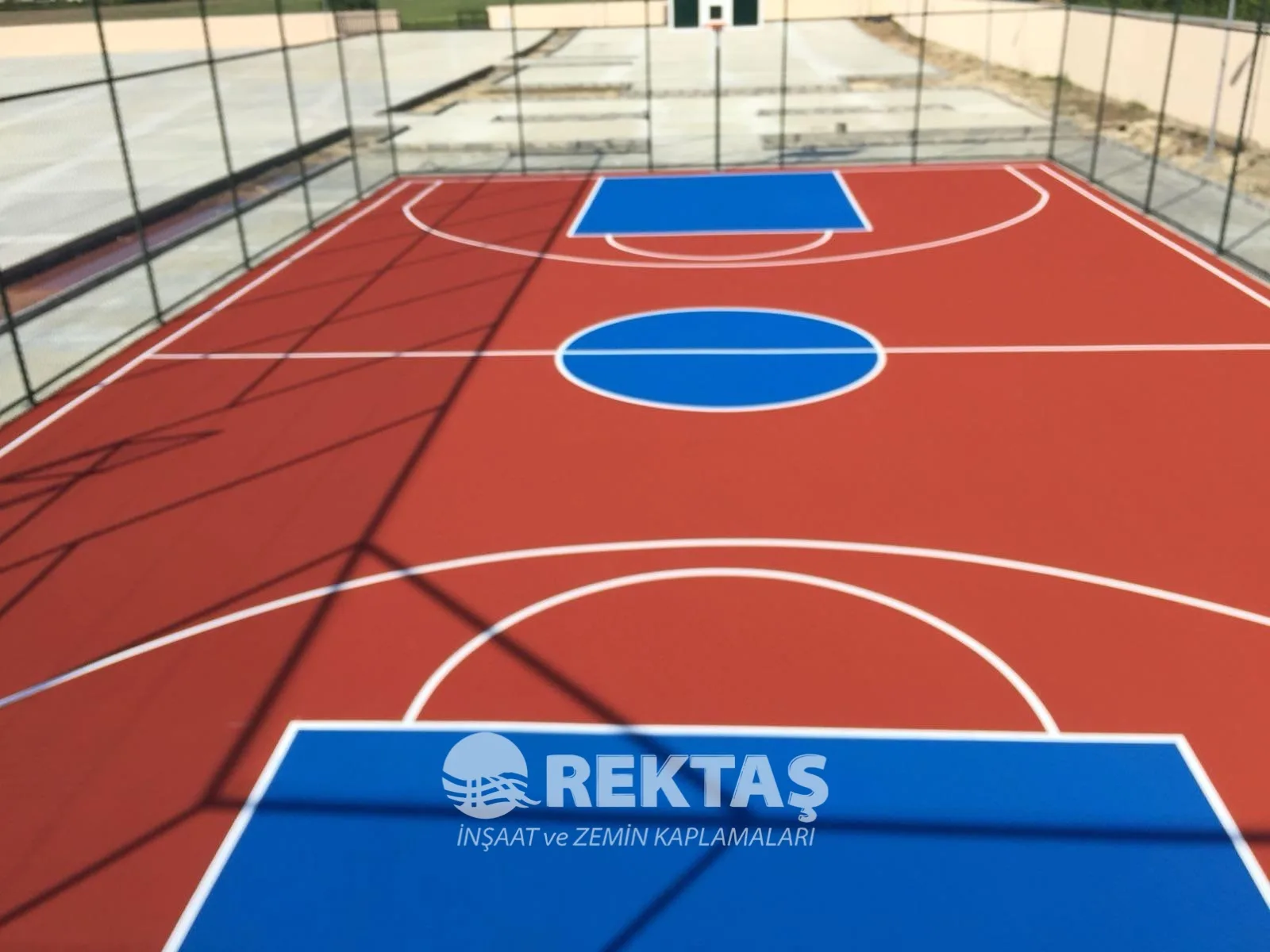
Quartz sand predominant, hard and fast surface acrylic type. Applied 3-4 mm thick. Ideal for tennis courts, basketball and volleyball courts. Ball bounce speed is high, game tempo is fast.
Cushioned Acrylic
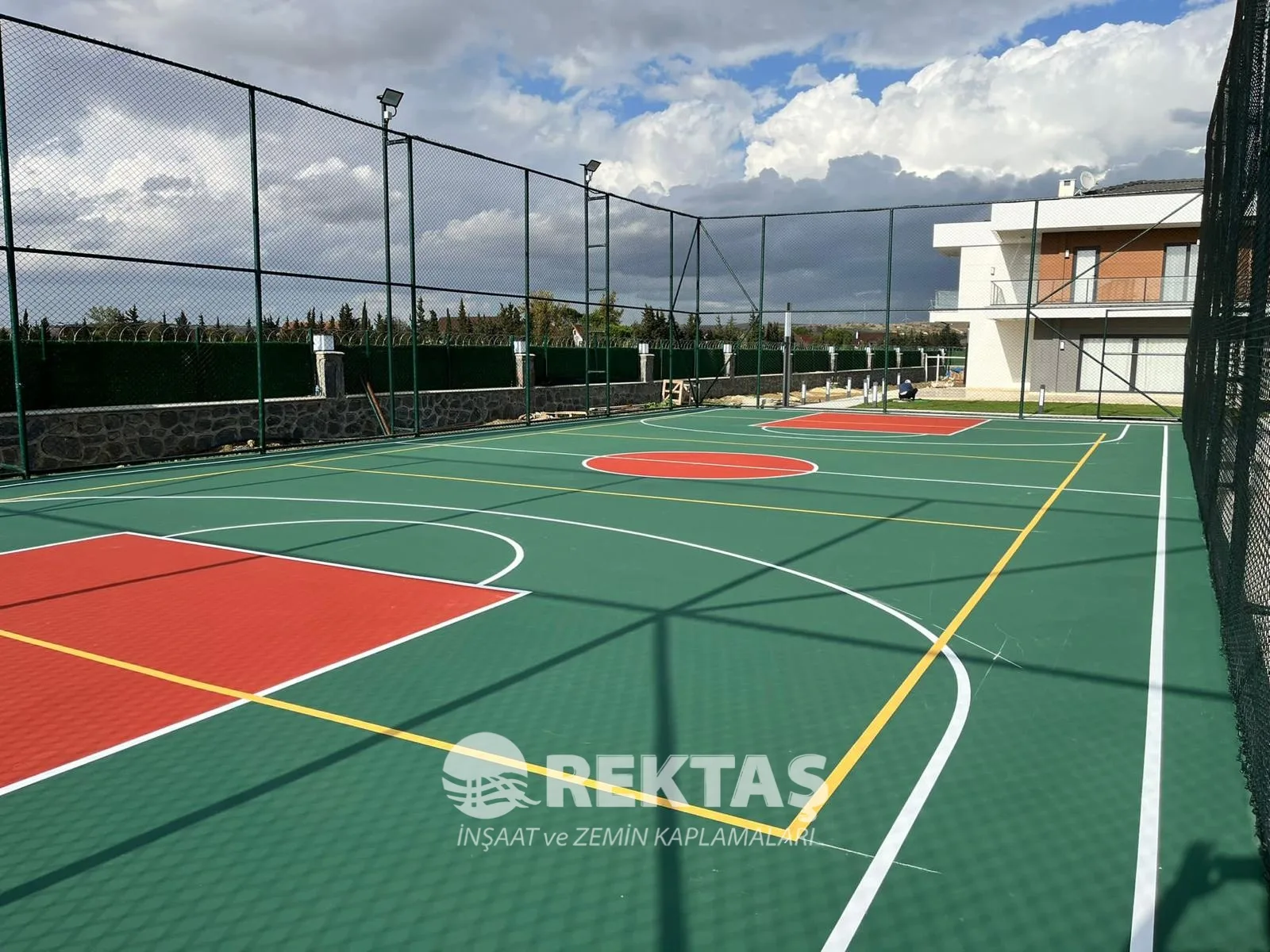
Acrylic type containing rubber granules in the base layer, shock-absorbing, joint-friendly. Has 8-15 mm total thickness. Preferred in professional tennis courts, multi-purpose sports fields, and school yards.
Textured Acrylic
Acrylic type containing coarse quartz sand or special textured filling, providing high grip. Prevents slipping, provides safe play even on wet surfaces.
Colored Multi-Layer Acrylic
Acrylic system where aesthetic patterns are created by applying layers in different colors. Ideal for school yards, children's play areas, thematic parks.
Advantages of Acrylic Floor Coating
UV and Weather Resistance
Acrylic formulation contains UV stabilizers, resistant to sun rays. Colors do not fade for years, maintain vibrancy.
Impact Absorption and Athlete Safety
In soft acrylic systems, rubber granule layer absorbs impacts and protects athletes' joints.
Water Permeability and Fast Drying
Thanks to its porous structure, water does not accumulate on the surface, filters to lower layers. Dries quickly after rain.
Non-Slip Surface and Safety
Thanks to textured surface, provides high grip on wet and dry surfaces. Slipping risk is minimal during athletes' sudden direction changes.
Easy Maintenance and Long Life
Daily sweeping and weekly washing with pressurized water are sufficient. Wear is very slow, maintains performance for 7-10 years in intensive use.
Environmentally Friendly and Health Compatible
Water-based formulation, low VOC emissions, does not contain toxic substances. Safe for children and athletes.
Usage Areas of Acrylic Floor Coating
Sports Facilities
- • Tennis courts
- • Basketball courts
- • Volleyball courts
- • Badminton courts
- • Multi-purpose sports fields
Educational Institutions
- • School yards
- • Kindergarten play areas
- • University campuses
- • Special education centers
- • Summer sports schools
Recreation Areas
- • Children's playgrounds
- • Municipal sports parks
- • Seaside promenades
- • Picnic areas
- • Public parks
Acrylic Floor Coating Application Process
1. Floor Preparation and Inspection
Subfloor is critical for successful acrylic floor application. Concrete floor should be cured for at least 28 days, smooth, and free of cracks. Floor slope should be adjusted between 0.5-1% for drainage.
2. Repair and Correction Procedures
Cracks are filled with flexible filling materials. Acrylic-based repair mortars are used for wide cracks. Surface flatness is checked with a 3-meter ruler.
3. Layered Application
Primer application, elastic base layer, intermediate layer, top layer, and final processes are carried out by professional teams.
4. Line Marking and Final Coat
After the top layer dries, play area lines are marked. UV protective clear acrylic varnish is applied to provide surface protection.
Maintenance and Cleaning Guide
Regular Maintenance Program
Daily
Sweeping leaves and debris, cleaning large dirt and stones
Weekly
Washing with high-pressure water, using pH neutral detergent
Annual
Professional maintenance, line renewal, surface control and local repairs
What Not to Use
- Metal brushes or abrasive cleaning tools
- Acidic or highly alkaline cleaners
- Solvent-based chemicals (thinner, gasoline)
- Scraping with sharp metal tools
- Metal shovels for snow and ice cleaning
Acrylic Floor Coating Prices
Factors Affecting Price:
- • Application type (hard acrylic, soft acrylic)
- • Total layer thickness and number of layers
- • Rubber granule quality and type
- • Area size and accessibility
- • Floor condition and preparation requirements
- • Number of colors and line marking complexity
- • Special logo and graphic applications
- • Shipping distance and logistics costs
Contact our expert team for acrylic floor coating prices
+90 532 523 85 67Acrylic Floor Coating Comparison
Acrylic vs Synthetic Turf
Synthetic turf provides softer and more natural appearance. Acrylic is harder, faster, and easier to maintain. Synthetic turf is ideal for football, acrylic is preferred for basketball and tennis.
Acrylic vs Tartan (Polyurethane)
Tartan is more flexible and shock-absorbing, used in professional athletics tracks. Acrylic is harder and more economical. Tartan is closed-cell, acrylic is open-cell.
Let's work together
We are the architects of innovation, the pioneers of development. As a strong business partner accompanying you in your success, we aim to add value in every project.